OECD Headquarters, Paris
By Fatima Martin Sanchez
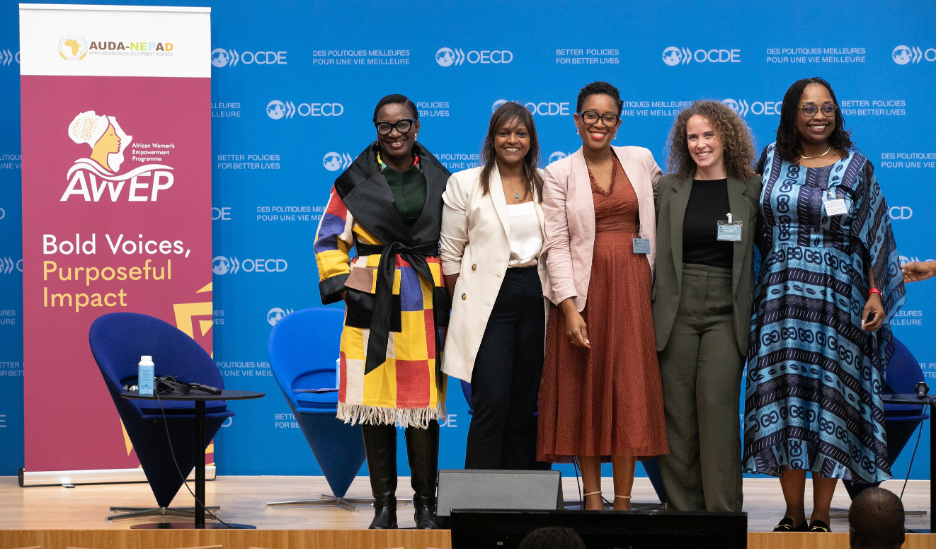
The inaugural Africa–Europe Dialogue on Gender Equality and Women’s Empowerment, co-organised by AUDA-NEPAD, the Sahel and West Africa Club Secretariat (SWAC) and the OECD, brought together high-level leaders, policymakers, researchers, entrepreneurs, and youth actors for a full day of exchange at the OECD Headquarters in Paris. Held at a pivotal moment as the G20 redefines global priorities for 2025, the convening underscored a shared commitment to accelerating gender equality across both continents through evidence, partnership, and strategic cooperation.
Opening remarks by AUDA-NEPAD and OECD leadership framed gender equality not as a charitable goal, but as a strategic lever for economic transformation, social justice, and geopolitical stability. A keynote by H.E. Thani Mohamed Soilihi further highlighted the urgency of strengthening cross-continental alliances.
Across five panels and a high-level partnership roundtable, participants examined the most pressing structural barriers affecting women and girls in Africa and Europe, including gaps in gender data, financial exclusion, mobility constraints, care responsibilities, limited representation in leadership, and persistent violence, including GBV and femicide.
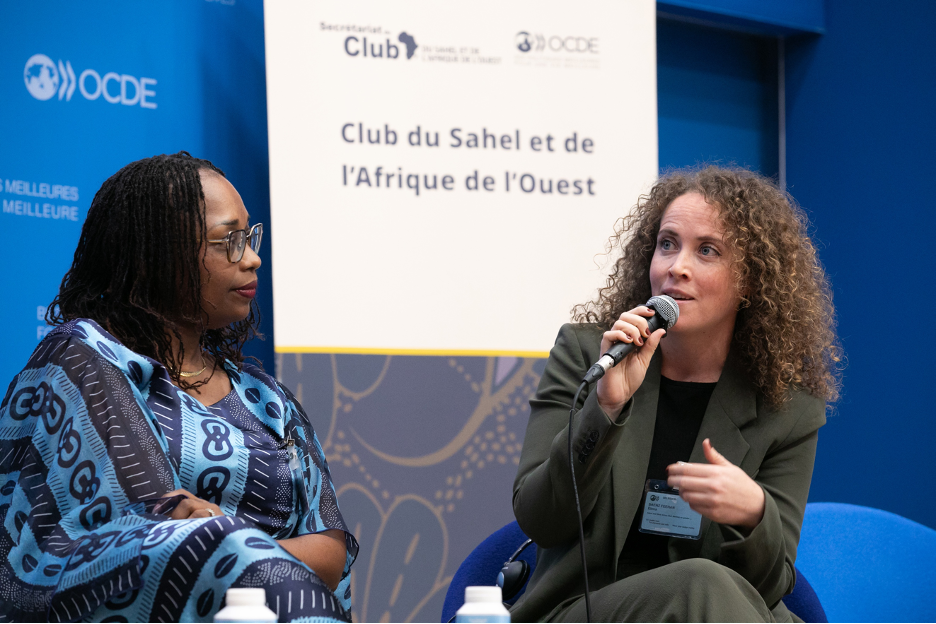
A central highlight came during Panel 1, where Ms. Elena Saenz, Executive Director of the Global Fund for Widows, delivered a powerful intervention on the realities faced by widows, particularly in rural communities. She stressed the importance of recognising widows as a distinct and often overlooked demographic within gender equality frameworks, drawing on field-based evidence to illustrate their heightened economic vulnerability, barriers to property rights, and invisibility in national policies. Her contribution grounded the discussion in lived realities and brought a critical grassroots perspective to an otherwise high-level policy dialogue.
Other key discussions included:
● Women’s Entrepreneurship and Economic Inclusion: Speakers unpacked the financing gap for women entrepreneurs—particularly the USD 42 billion deficit in Africa - while exploring innovative financial tools and regulatory reforms inspired by both African and European experiences.
● Gender, Mobility and Economic Empowerment: Panellists highlighted how unsafe and inaccessible transport systems limit women’s participation in the economy and advocated for gender-sensitive mobility planning.
● Youth and Diaspora Engagement: Young leaders and diaspora innovators showcased the role of cross-border collaboration and intergenerational partnerships in accelerating gender equality.
● Positive Masculinity & SRH: Experts discussed transforming gender norms, supporting GBV survivors through mental health interventions, and expanding access to sexual and reproductive health services.
● Women’s Public-Sector Leadership: Discussions centred on quotas, legal reforms, and leadership development as strategies to strengthen women’s representation in public governance.
The Partnership Roundtable brought together ambassadors, development institutions, and gender specialists to reaffirm long-term political and financial commitments—especially critical as global funding for gender equality faces increasing uncertainty.
Contributions throughout the day were supported by new evidence from OECD/SWAC and insights from their Women Leading Change podcast series, as well as AUDA-NEPAD’s ambitious African Women’s Empowerment Programme (AWEP), which targets economic inclusion, mental health and GBV recovery, and public-sector leadership across the continent.
The Dialogue concluded with a joint Call to Action from AUDA-NEPAD and SWAC/OECD, reaffirming the need for a strong, enduring Africa–Europe coalition committed to dismantling structural barriers and advancing gender equality through coordinated, cross-continental action.